

Solar Panel Models and Prices
With rising energy costs and growing environmental concerns gaining ever more importance today, solar energy has become a popular alternative energy source. Solar panels are systems that convert sunlight directly into electrical energy, and they are becoming more efficient and accessible with each passing day. However, there are many different options among solar panel models, and choosing the right panel is critically important for the efficiency of your system. In this article, we will provide what you need to know about solar panel models and offer a general overview of solar panel prices.
Solar Panel Models
Solar panels are generally divided into two main types: monocrystalline and polycrystalline. Each type has certain advantages and application areas. Beyond these, there are also other specialized types such as thin-film solar panels. When choosing a solar panel, it is important to select the panel that best fits your needs.
1. Monocrystalline Solar Panels
Monocrystalline solar panels are panels manufactured from a single crystal structure. This type of panel is known for its high efficiency. Although they are generally more expensive, they offer the best performance in terms of efficiency. Monocrystalline panels are typically black in color and can collect sunlight most efficiently at a specific angle.
Advantages:
High efficiency: ranges between 18–22%.
Provides higher energy production in smaller areas.
Long-lasting, generally offering warranties of 25 years or more.
Has a more aesthetically pleasing appearance.
Disadvantages:
More expensive compared to other panels.
Requires advanced technology and has a high production cost.
Application Areas:
Monocrystalline panels are frequently preferred in homes with limited space, commercial buildings, and large-scale solar energy projects.
2. Polycrystalline Solar Panels
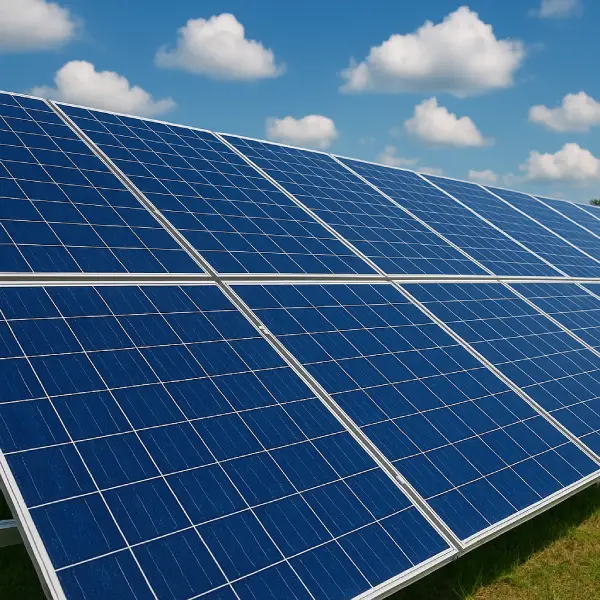
Polycrystalline solar panels are panels produced from the combination of multiple crystals. These panels generally have lower efficiency compared to monocrystalline panels, but they are more affordable. Polycrystalline panels, which are blue in color, can be used in larger areas and attract attention with their competitive prices.
Advantages:
More affordable price.
Manufacturing process is easier and faster.
Reliable and durable.
Disadvantages:
Lower efficiency rate: ranges between 15–18%.
Requires a larger area.
May appear less aesthetically pleasing compared to monocrystalline panels.
Application Areas:
Polycrystalline panels are suitable for locations with large roof areas and for users seeking economical solutions.
3. Thin-Film Solar Panels
Thin-film solar panels are lightweight and flexible panels manufactured from a thin film layer. These panels are generally used in large surface areas and commercial projects. While thin-film panels have lower efficiencies, they are cost-effective options.
Advantages:
Lower cost.
Can be applied to various surfaces thanks to their flexible structure.
Can operate even in low-light conditions.
Disadvantages:
Efficiency rate is quite low: between 10–13%.
Requires a larger area compared to other types.
Durability and lifespan may be shorter.
Application Areas:
Thin-film solar panels are preferred in projects that can be applied to larger areas and different surfaces.
4. Hybrid Panels (Bifacial Panels)
Hybrid or bifacial panels are panels that generate energy from both sides. By absorbing sunlight not only from the front surface but also from the rear surface, they produce more energy. Although these panels are more efficient, they are generally more expensive.
Advantages:
Increases efficiency by generating energy from two surfaces.
Provides high efficiency.
Can be used in various application areas.
Disadvantages:
High cost.
More complex installation requirements.
Application Areas:
Hybrid panels are used in projects seeking high efficiency and with areas that can receive sunlight from all angles.
Solar Panel Prices
Solar panel prices vary depending on the type, capacity, efficiency, and brand of the panels. Monocrystalline panels are generally more expensive than polycrystalline panels because they offer higher efficiency. Thin-film panels come at lower prices, but their efficiency is also lower.
Other factors affecting solar panel prices:
Panel Capacity: Panels with higher capacity are generally more expensive.
Manufacturer and Brand: Panels from well-known brands may be sold at higher prices.
System Installation Cost: The installation cost of a solar panel system can create a certain price difference independently of panel prices.
In general, prices for monocrystalline solar panels are associated with the cost of panels with higher efficiency. Polycrystalline panels are generally more affordable. Thin-film panel prices are more competitive and are generally a good alternative for users seeking economical solutions. These prices may increase together with installation costs and other additional components.
What to Consider When Choosing a Solar Panel?
When choosing a solar panel, you need to pay attention to some important criteria to make the right decision:
Efficiency: High-efficiency panels generate more energy in smaller areas. This is an important factor if your space is limited.
Price: The cost of a solar panel is an important factor for long-term savings. More economical options may be more suitable as a starting point.
Warranty and Durability: Panels with long warranties and high durability require less maintenance in the long run.
Installation Area: If your space is small, it would be better to prefer more efficient systems such as monocrystalline panels.
Conclusion
Solar energy systems offer an environmentally friendly lifestyle through sustainable energy use. There are many options among solar panel models, and each meets different needs. Models such as monocrystalline, polycrystalline, thin-film, and hybrid panels each come with different efficiencies and price points. Selecting the panel that best suits your needs enables you to maximize energy savings.


