
Lithium Battery Manufacturing
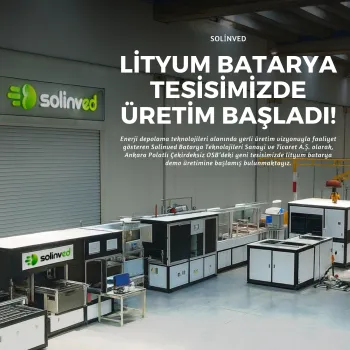
Solar energy, electric vehicles, and energy storage systems are driving the widespread adoption of sustainable energy use. One of the key components in these systems is the lithium battery. With their high energy density, long lifespan, and low maintenance requirements, lithium batteries are revolutionizing energy storage solutions. Solinved is leading domestic and reliable lithium battery production in Turkey through its demo production line launched at its new facility in Ankara Polatlı Çekirdeksiz Organized Industrial Zone.
What Is a Lithium Battery?
Lithium batteries are rechargeable batteries known for their high energy density and lightweight design. They are used to store energy in solar energy systems, electric vehicles, and industrial storage systems.
The main advantages of lithium batteries include:
- Long lifespan (typically 10–15 years)
- High charge/discharge cycle capability
- Low maintenance requirements
- Lightweight and compact design
- High efficiency and energy storage capacity
How Are Lithium Batteries Manufactured?
Lithium battery manufacturing is a process that requires advanced technology and high precision. The key steps are as follows:
1. Material Preparation
Lithium battery production begins with the preparation of raw materials such as lithium, cobalt, nickel, and graphite. These materials form the cathode and anode structure of the battery. Solinved maximizes battery performance by using raw materials that meet high quality standards.
2. Electrode Manufacturing
Cathode and Anode Coating: Materials containing lithium, nickel, or cobalt are applied to electrode surfaces.
Drying and Pressing: The coated electrodes are dried and pressed to increase density. This process enhances the battery's energy density and lifespan.
3. Cell Assembly
Electrode and Separator Assembly: The cathode and anode are assembled together using specialized separators.
Cell Encapsulation: The cell is placed inside a specialized casing to prevent leakage and ensure safe operation.
4. Electrolyte Filling and Activation
Electrolyte Addition: An electrolyte that enables ion transport is added to the cell.
Formation Process: The battery undergoes charge/discharge cycles for performance testing. This step determines the battery's capacity and efficiency.
5. Testing and Quality Control
Solinved lithium batteries undergo rigorous quality control tests after production:
- Capacity testing
- Internal resistance and energy efficiency testing
- Temperature and safety testing
These stages guarantee that batteries are long-lasting, safe, and high-performing.
Applications of Lithium Batteries
Lithium batteries are used in a wide variety of energy systems:
Solar Energy Systems:
By storing energy generated from solar panels, they make energy use possible even at night or on cloudy days.
Electric Vehicles (EV):
Lithium batteries make electric vehicles lightweight and long-range. Solinved offers integrated solutions with EV charging systems.
Agricultural Irrigation Systems:
Lithium batteries can be used in irrigation pumps to ensure energy independence, enabling uninterrupted irrigation.
Industrial Energy Storage:
Used in commercial facilities to store energy, reduce energy costs, and perform peak-time load balancing.
Residential Storage Systems:
Ideal for storing electricity generated from solar energy and enabling nighttime use.
Solinved Lithium Battery Manufacturing Facility
Solinved Battery Technologies Industry and Trade Inc. has commenced demo production of lithium batteries at its 2,500 m² enclosed facility located right next to the solar panel factory.
Investment: Approximately 100 million TRY was spent in the first phase; upon completion of the second phase, total investment is planned to reach 250 million TRY.
Production Capacity: The facility can produce 100 units of 32-cell 3.2V 314Ah container-type battery packs per day and 600 units of 51.2V 100Ah (5kWh) batteries per day. This translates to an annual production capacity of 1 GWh.
Production Line: The semi-automatic assembly line enables scalable production for energy storage solutions across different segments.
Through this facility, Solinved manufactures not only battery enclosures but also container-type energy storage systems, electric vehicle charging stations, solar inverter systems, and driver panels for solar drives.
Key Features of Solinved Lithium Battery Production
High Efficiency: Delivers long-term performance with maximum energy storage and minimal losses.
Safe Design: Resistant to risks such as short circuits, overheating, and leakage.
Long Lifespan: Provides high performance for 10–15 years and is optimized for charge/discharge cycles.
Integrated Solutions: Ensures seamless integration with solar energy systems, EV charging stations, and energy storage systems.
Minimal Maintenance Requirements: Lithium batteries offer users a practical experience with low maintenance needs.
The Future of Lithium Battery Manufacturing
With the growing use of solar energy and electric vehicles, lithium battery manufacturing is a rapidly expanding sector. Solinved supports the energy transition with high-performance and safe battery production. The efficiency and durability of lithium batteries make renewable energy systems more sustainable and cost-effective.
FAQ (Frequently Asked Questions)
1. How long do lithium batteries last?
Solinved lithium batteries typically deliver high performance for 10–15 years.
2. Which systems can lithium batteries be used in?
They can be used in solar energy systems, electric vehicles, agricultural irrigation, and industrial energy storage systems.
3. Do lithium batteries require maintenance?
Maintenance needs are minimal; periodic inspection and cleaning are generally sufficient.
4. Are lithium batteries safe?
Solinved lithium batteries are designed to be safe against risks such as short circuits, overheating, and leakage.
5. How is lithium battery integration with solar energy carried out?
DC energy produced from solar panels is directed to the battery via Solinved inverters and charge controllers for storage.
6. What is Solinved's lithium battery production capacity?
600 units of 51.2V 100Ah (5kWh) batteries can be produced per day, with an annual production capacity of 1 GWh.
7. What is the lifespan of the batteries?
They provide high performance for 10–15 years.
8. Is integration with an energy storage system possible?
Yes, Solinved batteries can work in an integrated manner with solar panels, solar inverters, and EV charging systems.