

What Do Charge Controllers Do?
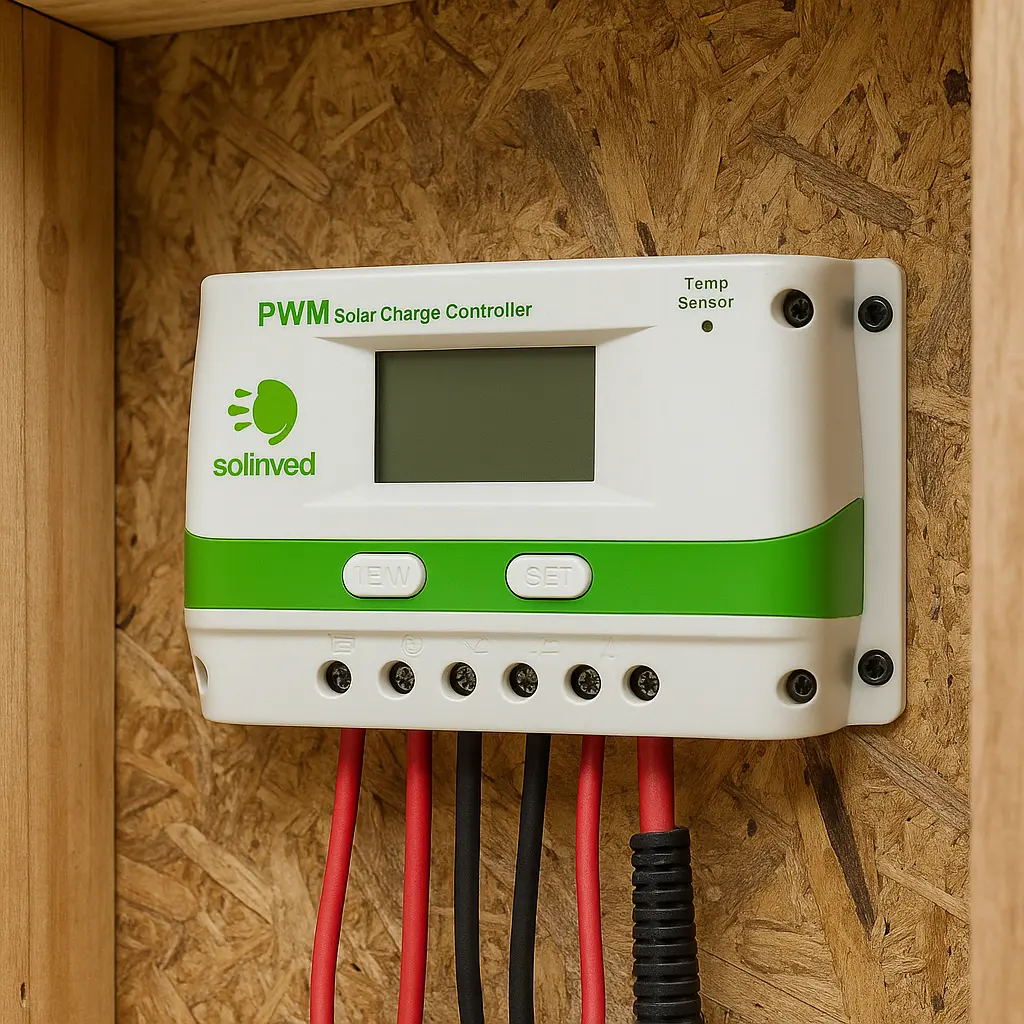
For solar energy systems to operate efficiently, the energy obtained from solar panels must be stored and directed correctly. Charge controllers play a critical role in this process. Charge controllers used in solar energy systems prevent batteries from overcharging, increasing the long-term efficiency of the system. In this article, we will examine what charge controllers do, how they work, and their importance in solar energy systems in detail.
What Is a Charge Controller?
A charge controller is a device in solar energy systems that stores and directs the direct current (DC) electricity obtained from solar panels in a manner compatible with batteries. Solar panels convert sunlight directly into direct current, but the voltage must be maintained at a specific level for batteries to charge safely. Charge controllers prevent batteries from overcharging and also protect against situations such as deep discharge (excessive depletion of the battery). These devices are important components that ensure solar energy systems operate reliably.
Operating Principle of a Charge Controller
Charge controllers continuously monitor the voltage and current as they transfer the electricity produced by solar panels to the batteries. The system works as follows:
- Energy from the Solar Panel: Solar panels convert sunlight into direct current (DC). This direct current is directed to the batteries through the charge controller.
- Voltage and Current Control: The charge controller monitors the battery's voltage level and ensures it stays within safe limits. If the battery is nearly full, the charge controller stops directing energy from the panel to the battery.
- Overcharge and Deep Discharge Protection: Charge controllers prevent batteries from overcharging (i.e., the battery's charge level exceeding 100%). Likewise, they prevent batteries from completely discharging (deep discharge). This is a feature that extends battery life and ensures efficient operation.
- Energy Routing: The charge controller can direct energy from solar panels to the grid or directly to consumption when needed. This is a mechanism that increases energy efficiency.
Types of Charge Controllers
Charge controllers come in various technologies and features. There are two main types of charge controllers: PWM (Pulse Width Modulation) and MPPT (Maximum Power Point Tracking).
1. PWM (Pulse Width Modulation) Charge Controllers
PWM charge controllers are older-technology devices that are generally more affordable solutions. PWM devices optimize voltage by regulating the charging speed of batteries. However, these devices may operate less efficiently, and in some cases more energy loss may occur.
Advantages:
Offer lower-cost solutions.
Simple and reliable technology.
May be sufficient for small and medium-sized solar energy systems.
Disadvantages:
Their efficiency is lower.
May not provide sufficient performance in advanced solar energy systems.
2. MPPT (Maximum Power Point Tracking) Charge Controllers
MPPT charge controllers are advanced devices that provide higher efficiency in solar energy systems. MPPT technology detects the maximum power point of the solar panel and uses the energy it produces in the most efficient way. These devices can operate up to 30% more efficiently and deliver better performance in larger systems.
Advantages:
Provides high efficiency, enabling greater energy harvest.
Offers faster charging and less energy loss.
Maintains high efficiency even in conditions where sunlight is variable.
Disadvantages:
More expensive.
More complex and may require more maintenance.
3. Hybrid Charge Controllers
Hybrid charge controllers are devices that can switch between both grid-connected energy systems and solar energy systems. These devices provide more flexible energy management by enabling energy to be drawn from the grid in addition to solar energy.
Advantages:
Can utilize both solar and grid energy.
Provides flexible energy solutions.
Surplus energy can be fed back to the grid.
Disadvantages:
Higher price.
Installation and maintenance requirements can be complex.
Benefits of Charge Controllers
Charge controllers in solar energy systems not only ensure batteries charge safely but also increase the overall efficiency of the system. Here are the main benefits offered by charge controllers:
- Extends Battery Life: Charge controllers prevent batteries from overcharging or fully discharging. This allows batteries to operate efficiently for longer periods.
- Increases Energy Efficiency: Devices using MPPT technology in particular extract greater benefit from solar energy, helping to optimize energy production.
- Preserves System Health: Safe charging of batteries preserves the overall health of the system and minimizes energy losses.
- Enhances User Safety: Charge controllers prevent risks such as overheating, short circuits, and leakage, ensuring user safety.
Conclusion
Charge controllers ensure that batteries are charged safely and that energy storage is carried out efficiently in solar energy systems. The choice between PWM and MPPT technologies directly affects system efficiency. High-efficiency MPPT charge controllers are necessary to extract maximum performance from solar energy, while PWM devices may be sufficient for smaller systems.
Using a charge controller in your solar energy system is an important step in terms of energy savings, safety, and long-term efficiency. When setting up your solar energy system, choosing the right charge controller is the key to optimizing your system and achieving maximum benefit.


