
What Is the Difference Between a Pure Sine Wave and a Modified Sine Wave Inverter?

As the use of solar energy and alternative energy sources becomes more widespread, inverter selection has become critically important. Inverters convert direct current (DC) into alternating current (AC) to power devices. However, there are various types of inverters available on the market. Among the most commonly preferred are pure sine wave and modified sine wave inverters. So, what are the differences between these two types, and which is more suitable in which situation?
What Is a Pure Sine Wave Inverter?
A pure sine wave inverter produces an output waveform that is virtually identical to the AC current found in the electricity grid. This represents the most ideal waveform in terms of power transmission and device compatibility. It has a more complex internal circuit, but delivers high-quality power as a result.
Advantages of a Pure Sine Wave Inverter:
- Compatibility: Works seamlessly with electric motors, refrigerators, televisions, and sensitive electronic devices.
- Energy Efficiency: Provides high energy efficiency and extends the lifespan of devices.
- Quiet and Trouble-Free Performance: The pure sine wave eliminates unwanted noise and interference in devices.
Disadvantages:
- Cost: Pure sine wave inverters are more expensive than modified sine wave inverters.
- Complex Design: Due to its complex internal structure, maintenance costs may be higher.
What Is a Modified Sine Wave Inverter?
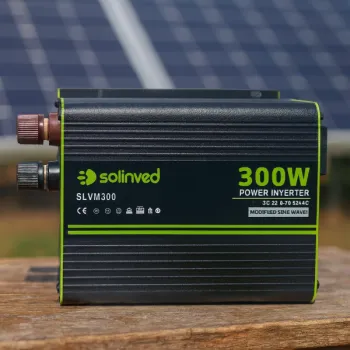
A modified sine wave inverter produces a waveform that resembles a pure sine wave but is more simplified. Because the waveform is not as smooth as a pure sine wave, it can cause performance issues with some devices.
Advantages of a Modified Sine Wave Inverter:
- Low Cost: Much more economical compared to pure sine wave inverters.
- Simple Design: Less complex, making maintenance and repair easier.
- General Use: May be sufficient for basic electronic devices and chargers.
Disadvantages:
- Incompatibility: May experience compatibility issues with sensitive electronic devices and motor-driven equipment.
- Performance Issues: Can cause excessive heat, noise, and inefficiency in some devices.
Pure Sine Wave vs. Modified Sine Wave Comparison
| Feature | Pure Sine Wave Inverter | Modified Sine Wave Inverter |
|---|---|---|
| Waveform | Smooth and natural sine wave | Simplified sine wave |
| Compatibility | Compatible with all devices | Compatible with basic devices |
| Cost | Higher | Lower |
| Efficiency | High | Medium |
| Application Area | Sensitive electronics and motor-driven devices | Basic devices and chargers |
Which Inverter Should You Choose?
When making your choice, you should consider your intended use and the requirements of your devices:
- Sensitive and High-Quality Devices: A pure sine wave inverter is ideal for devices such as refrigerators, televisions, and laptops.
- Basic Electronics: A modified sine wave inverter may be sufficient for simple devices such as light bulbs and fans.
When choosing between pure sine wave and modified sine wave inverters, you should take into account your system's needs and the devices that will be used. A pure sine wave inverter offers high performance and compatibility, while a modified sine wave inverter provides an economical solution. Making the right choice optimizes your energy efficiency and the performance of your devices.